
SmartAIM · Asset Investment Management, an add-on to SmartOPS™ New
Every dollar in your capital plan should trace back to a real asset.
Your crews inspect, read and repair your assets every day. SmartAIM turns that work into remaining life, valuation and a costed ten-year capital plan, so the plan you take to your board is one you can defend.

The people who know your assets aren’t the ones writing the plan.
The register lives in a spreadsheet. Condition data stays in the field. Finance plans on age and averages. When the board asks “why this asset, why this year?”, the answer is hard to prove.
Condition from the work itself
Most capital-planning tools start in finance and wait for someone to send them data. SmartAIM starts where SmartOPS already is: every reading taken on every job feeds the asset’s history automatically. The plan stays current because the work keeps it current.
Seven steps, one connected record
Step 1
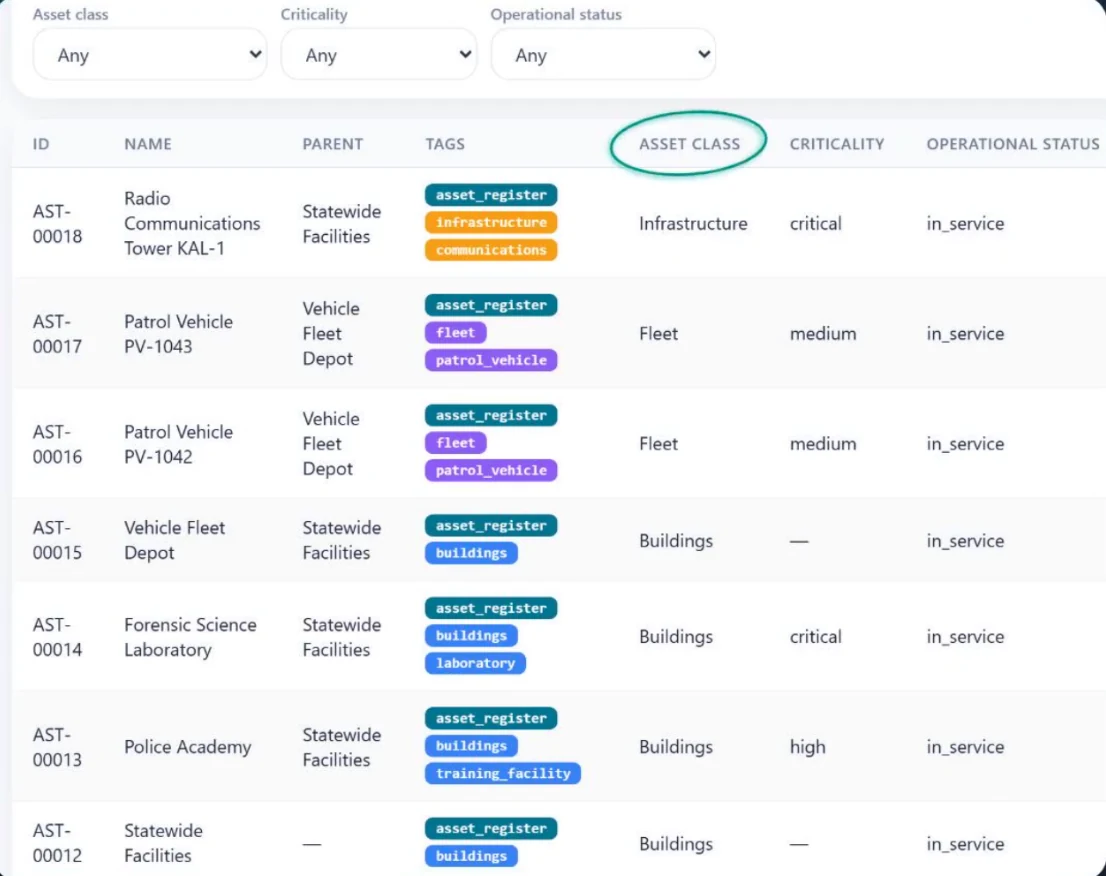
One register, every asset class.
Facilities, fleet, plant and infrastructure in one hierarchy you define. Import what you have today.
Step 2
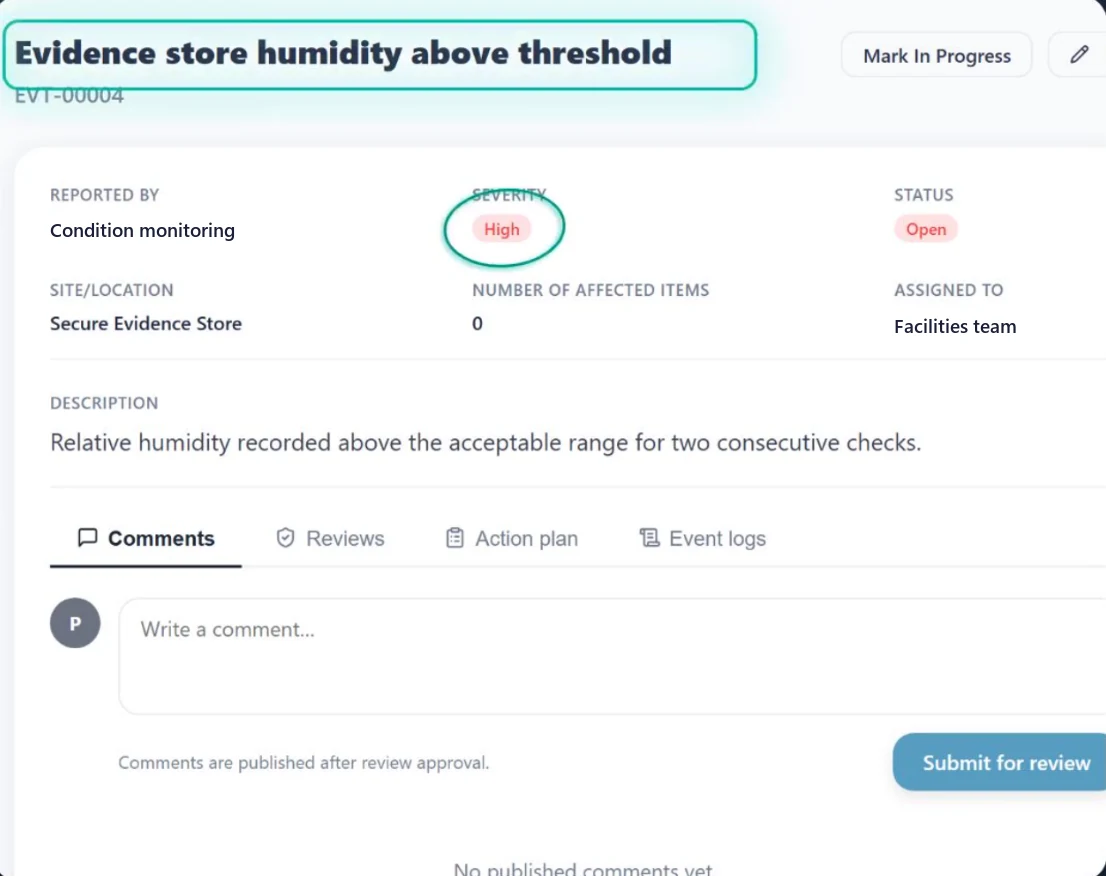
Condition trends that act.
Readings are projected towards their limits, and work is raised before a limit is crossed.*
Step 3
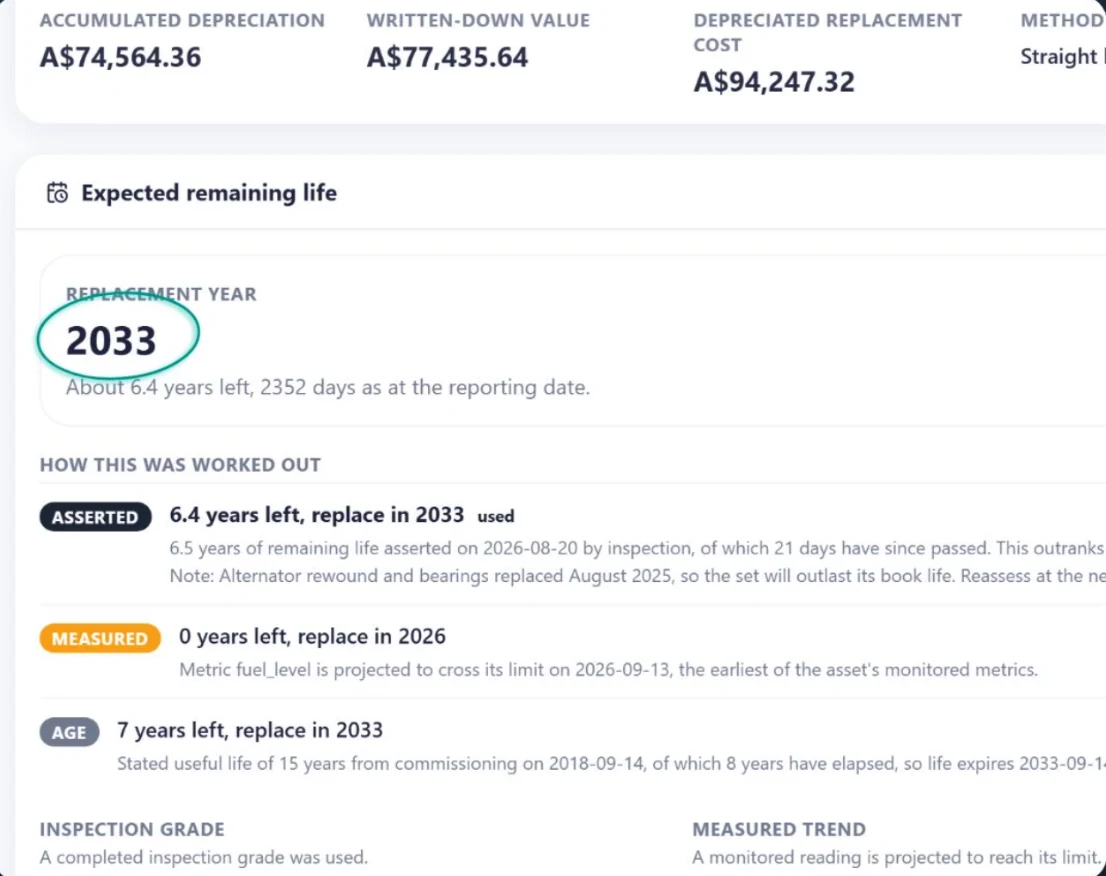
Remaining life and replacement year.
Every basis considered, with the reasoning shown.

Step 4
Valuation, three ways.
Historical cost, depreciated replacement cost and market value, as at any date.
Step 5
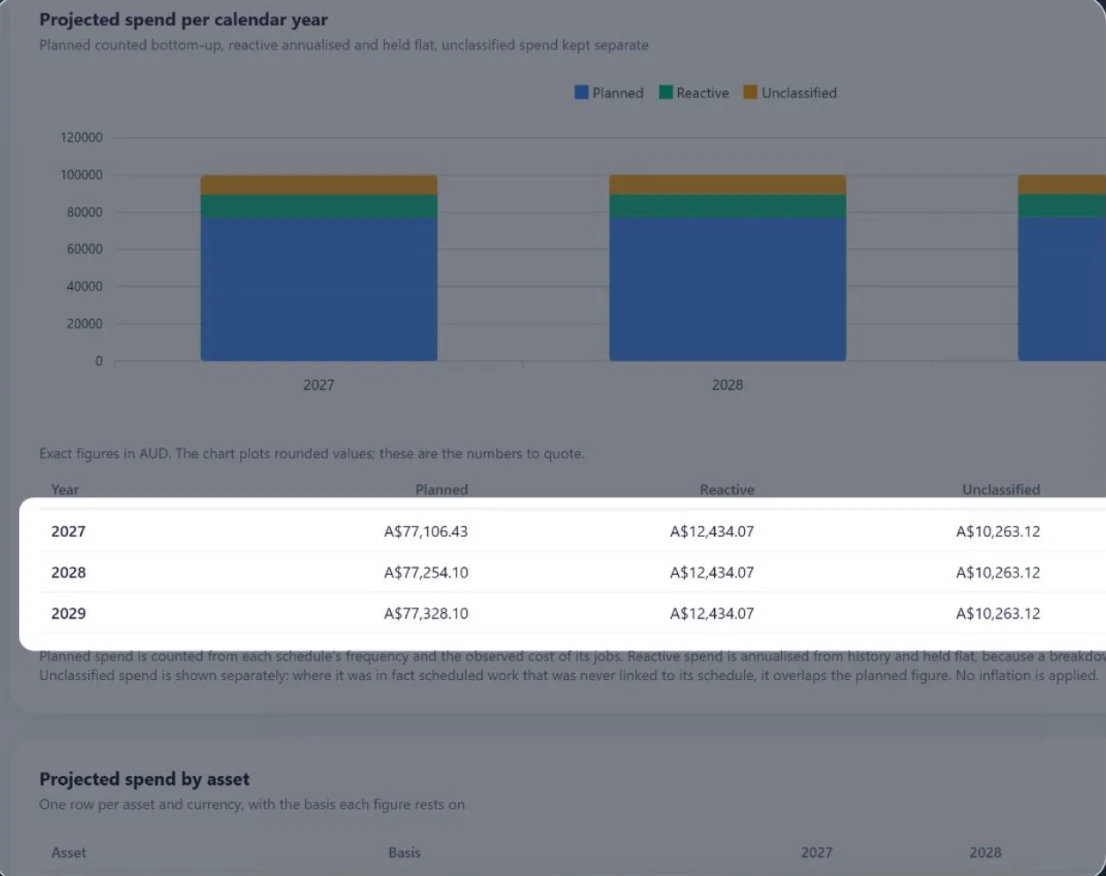
Forecast the spend.
Planned work built up from the bottom, reactive spend annualised, year by year.
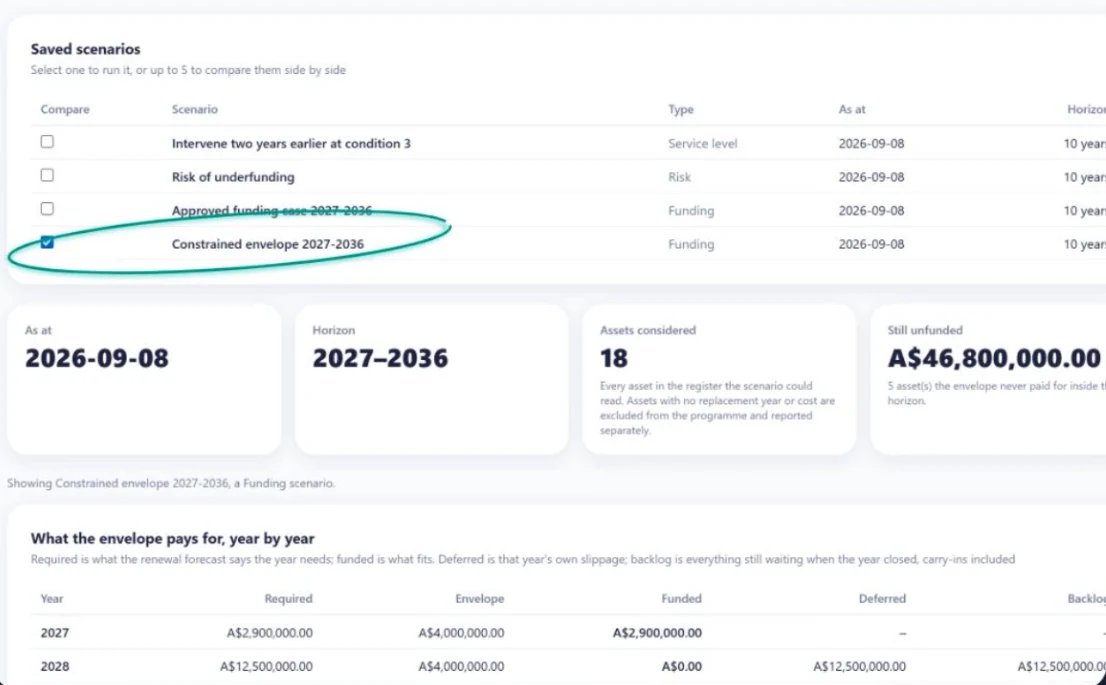
Step 6
Model the funding.
See what a constrained budget defers, and what never fits.
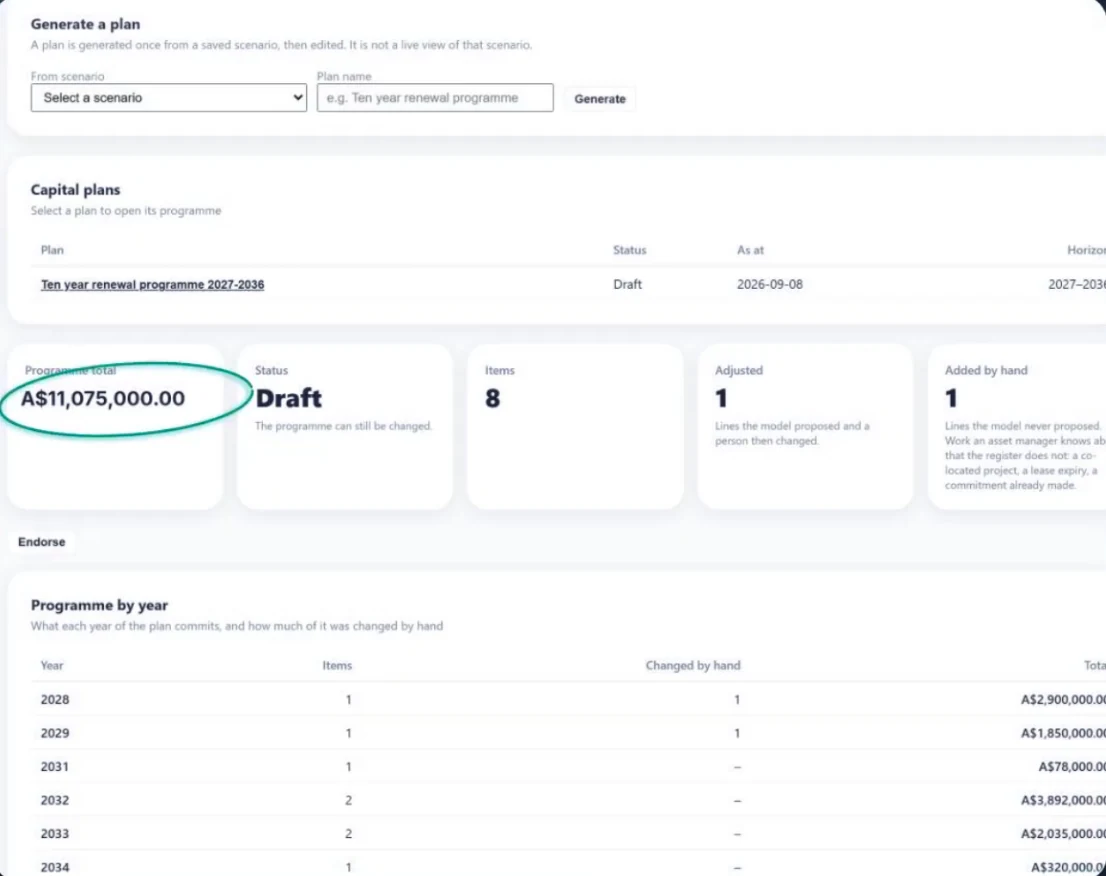
Step 7
Generate the capital plan.
A costed ten-year programme, with every line traceable to an asset and its condition.
* Configurable. Switched on per organisation during setup.
For the people who answer for the assets
Asset managers, finance leaders and capital planners in utilities, councils, school districts, universities, police and other public bodies, and in any operation where ageing assets meet tight budgets.
Bring your asset register. See your first ten-year view.
Send us your current register, in whatever shape it is in. We load it, add the condition data you have, and walk you through your first ten-year view.