Key takeaways
- Digital work instructions for manufacturing help frontline workers learn tasks through clear, step-by-step guidance instead of relying entirely on paper manuals or experienced colleagues.
- Visual work instructions, including photos, videos, and diagrams, can make complex procedures easier to understand and follow.
- Capturing knowledge from experienced workers helps organizations preserve critical expertise and make it accessible to new employees, technicians, and distributed frontline teams.
- A structured training process combines digital instructions with hands-on practice, competency checks, and regular reviews of training performance.
- Telepresenz SmartITM™ helps industrial organizations capture expert knowledge and turn it into digital work instructions, SOPs, and training content that frontline teams can access when needed.
Manufacturing teams depend on experienced workers to keep production moving, maintain equipment, troubleshoot problems, and follow safety procedures. But when a new employee joins the team, learning these tasks can take time. The knowledge they need may be spread across paper manuals, spreadsheets, training documents, and the experience of senior employees.
This creates a challenge for operations managers. Experienced workers cannot spend every day training new employees, while new workers need clear guidance to perform tasks correctly and safely. The challenge becomes more difficult when organizations operate across multiple shifts, production lines, plants, or locations.
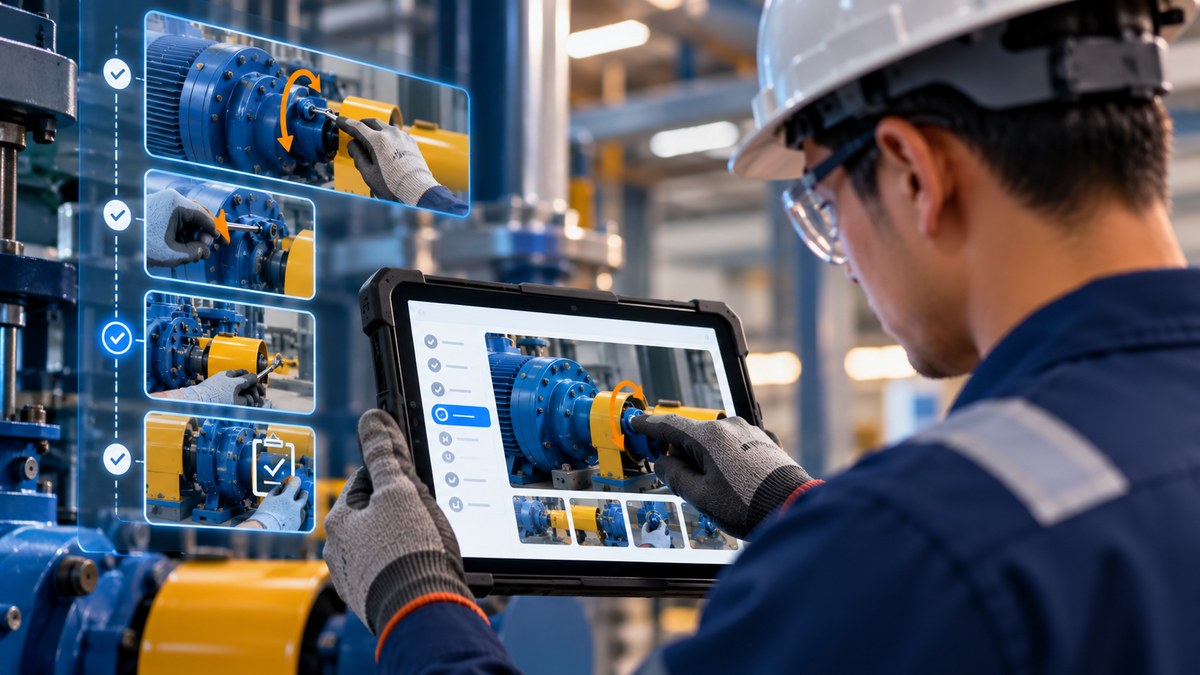
Digital work instructions for manufacturing help address this problem by giving workers structured guidance at the point of work. Instructions can include step-by-step actions, photos, videos, safety checks, and quality requirements that help employees understand how a task should be performed.
When digital instructions are combined with hands-on practice and competency assessments, manufacturers can create a more consistent training process. They can also capture knowledge from experienced workers and make it available to the wider workforce.
The objective is not simply to digitize existing training documents. It is to help frontline workers find the right information, apply it during a task, and develop the skills needed to work independently.
Why is frontline worker training difficult in manufacturing?
Frontline training in manufacturing involves more than explaining a procedure. Workers need to understand equipment, recognize potential hazards, follow the correct sequence of actions, and know what to do when something does not go as expected.
Several challenges can make this process difficult.
New employees depend on experienced workers
Much of the knowledge needed to operate equipment or troubleshoot problems comes from experience. New employees often learn by observing senior technicians and asking questions. This approach can work, but it places a significant training burden on experienced workers and makes knowledge transfer dependent on their availability.
Procedures are difficult to find
Important instructions may be stored in paper manuals, PDFs, shared drives, or separate systems. Workers may struggle to identify the latest approved procedure when they need it. If they cannot find the right information quickly, they may have to stop the task and ask a supervisor or colleague for help.
Training varies across teams
Different supervisors may explain the same task in different ways. Workers on different shifts may receive different levels of detail, particularly when training depends on informal demonstrations. This can lead to inconsistent understanding and differences in how procedures are performed.
Long training sessions interrupt daily work
Manufacturing operations must balance training with production requirements. Taking experienced workers away from their regular responsibilities to provide repeated demonstrations can affect productivity. New employees also need opportunities to practice without compromising safety or quality.
These challenges show why manufacturing organizations need a repeatable way to deliver training and make operational knowledge accessible. Digital work instructions can help connect documented procedures with the tasks employees perform every day.
How do digital work instructions help train workers faster?
Digital work instructions software helps workers learn by presenting task-specific information in a structured format. Instead of reading through a lengthy manual or relying entirely on verbal explanations, employees can follow the required steps while performing the task.
The effectiveness of this approach depends on the quality of the instructions, the complexity of the task, the worker’s experience, and the training process surrounding the technology.
Break complex tasks into clear steps
A complex maintenance or assembly procedure can be difficult to remember when explained all at once. Digital instructions can divide the task into manageable steps, helping workers understand the correct sequence and complete each stage before moving forward.
Use visual work instructions
Photos, diagrams, videos, and annotations can help workers understand equipment, identify components, and recognize what a completed step should look like. Visual work instructions are especially useful when a procedure is difficult to explain through text alone.
Guide workers at the point of work
Workers can access relevant instructions while performing a task rather than leaving the work area to search through documents or contact an expert. This makes it easier to apply training during actual operations.
Capture knowledge from experienced employees
Experienced technicians often know practical details that are missing from formal documentation. Organizations can capture demonstrations, troubleshooting methods, and task-specific knowledge and convert them into reusable instructions for other employees.
Research also provides evidence that the format of work instructions can affect task performance. A 2026 study published in Applied Sciences reported that digital instructions reduced average assembly time by 44.75% compared with paper instructions in a controlled experiment involving an unfamiliar mechanical task.
This result demonstrates the potential value of digital instructions in a specific experimental setting. It should not be interpreted as a guaranteed reduction in training time across every manufacturing environment.
How to train frontline workers faster: 7 steps
Digital work instructions are most effective when they form part of a structured training process. Manufacturers can use the following seven steps to make training more consistent and easier to measure.
Identify tasks that take the longest to learn
Start by identifying the tasks that require extensive supervision, repeated demonstrations, or frequent assistance from experienced employees. These may include equipment setup, preventive maintenance, inspection procedures, assembly operations, or troubleshooting.
Prioritize tasks that have a significant effect on safety, product quality, production continuity, or onboarding time. This helps focus the initial effort on areas where better instructions could make the greatest difference.
Record how experienced workers perform the task
Observe experienced employees performing the selected task. Document the sequence of actions, tools required, safety precautions, common mistakes, and quality checks.
Photos and videos can help capture details that are difficult to communicate through written instructions alone. Involving experienced workers also helps identify practical knowledge that may not appear in existing SOPs or manuals.
Create digital work instructions for manufacturing tasks
Convert the documented process into clear, structured instructions. Include the task objective, required tools, safety precautions, individual steps, visual guidance, and verification criteria.
Keep each step focused on a specific action. Use simple language and explain technical terms when necessary. The objective is to help workers understand what to do, how to do it, and how to confirm that the step has been completed correctly.
Organize instructions by role, task, and equipment
Creating instructions is only part of the process. Workers also need to find the correct information when they need it.
Organize content by equipment, production line, task, location, or employee role. Establish a review and approval process so workers can identify the current approved procedure rather than relying on outdated versions.
Combine digital learning with hands-on practice
Digital instructions should support practical training rather than replace it entirely. Workers need opportunities to apply the instructions under appropriate supervision, ask questions, and develop confidence with the equipment or process.
For safety-critical tasks, organizations should continue to follow the required supervision, authorization, and competency procedures. Digital guidance alone does not establish that a worker is qualified to perform a task independently.
Check competency before independent work
After training, ask workers to demonstrate the task and confirm that they understand the required procedure, safety precautions, and quality standards.
Use practical assessments, supervisor observations, or task-specific checks to identify areas where additional instruction is needed. Employees should be authorized to work independently only when they meet the organization’s competency requirements.
Review training results and update content
Measure how long workers take to become competent, how frequently they need assistance, and whether errors occur during task execution. Use this information to identify gaps in the training process.
When procedures, equipment, or safety requirements change, review the associated instructions and update them through the appropriate approval process. Regular reviews help keep training content useful and accurate.
Manufacturers should also align their training process with applicable safety requirements. The Occupational Safety and Health Administration’s training guidance provides a useful reference for planning effective workplace safety training.
What should digital work instructions include?
Effective digital work instructions should give workers the information needed to complete a task safely and correctly.
| Component | What it should contain |
|---|---|
| Task objective | The work to be completed |
| Tools and equipment | Items required before work begins |
| Safety checks | Hazards, protective equipment, and required precautions |
| Step-by-step guidance | The approved order of actions |
| Visual aids | Photos, diagrams, or videos for difficult steps |
| Quality checks | How to confirm that the task meets the required standard |
| Escalation steps | What to do when a fault or unexpected condition appears |
| Version details | Procedure owner, approval status, and revision date |
Interactive work instructions may also include checklists, confirmations, measurements, photos, and task completion records, depending on the platform.
For industrial teams, the content should remain easy to find and simple to follow. A long manual copied onto a screen may still be difficult for a worker to use during a task.
Telepresenz case study: Capturing mining expertise in days instead of months
One of the challenges in industrial training is turning the knowledge of experienced workers into documented procedures that other employees can use.
An Australian mining operator faced this challenge when creating operational procedures. The traditional process depended on technical writers and could take three to six months to complete.
With Telepresenz SmartOPS™, field experts could record procedures using iPads, voice commands, photos, and videos. This allowed workers to capture practical knowledge directly from the field rather than relying entirely on a separate documentation process.
The approach helped the organization create a searchable knowledge base and reduced its dependence on technical writers for procedure creation.
It is important to distinguish procedure creation from employee training. The documented case study demonstrates faster knowledge capture and procedure development; it does not establish a measured reduction in training time.
Read the Australian mining knowledge-capture case study.
How can companies measure frontline training effectiveness?
Introducing digital work instructions does not automatically mean workers will learn faster. Manufacturers need to measure whether the training process improves task performance, knowledge retention, and readiness for independent work.
A study published in the Journal of Manufacturing Technology Management examined digital work instructions in a controlled battery-assembly experiment involving 80 technical-vocational students. The study reported productivity improvements of 16–20%, error reductions of 46–60%, and fewer requests for help.
These findings provide evidence of the potential benefits of digital instructions in the study’s specific setting. Actual outcomes will vary according to the task, workforce, implementation, and training approach.
Manufacturers can track the following measures to evaluate their own results.
Time to competency
Measure the time between an employee starting training and demonstrating the ability to perform the task to the required standard.
Training time
Track the total time spent on instruction, demonstrations, supervised practice, and formal assessments.
Supervisor support
Monitor how often new employees need help from supervisors or experienced colleagues while performing a task.
Task error rate
Record the frequency of mistakes, missed steps, rework, or deviations from approved procedures.
First-time completion
Measure how often workers complete a task correctly the first time without needing rework or repeated intervention.
Assessment results
Use practical demonstrations, knowledge checks, and competency assessments to confirm that workers understand the procedure and can apply it correctly.
Establish a baseline before introducing digital work instructions. Compare the results after implementation while accounting for differences in task complexity, employee experience, and operating conditions. This helps organizations determine whether the changes are improving training outcomes.
How Telepresenz SmartITM™ supports frontline training
For industrial organizations that need to capture expert knowledge, create training content, and make operational information accessible to frontline teams, Telepresenz SmartITM™ provides a training and knowledge management solution.
SmartITM™ helps organizations turn knowledge from experienced employees into digital work instructions, standard operating procedures, and training content. Rather than leaving essential information in individual employees’ memories or disconnected documents, organizations can make that knowledge easier to find and reuse.
Knowledge capture
Capture practical knowledge from experienced workers and make it available for documentation, training, and knowledge transfer.
Training content creation
Turn operational procedures and expert knowledge into structured digital instructions, SOPs, and training resources.
Searchable knowledge access
Help frontline employees find relevant procedures and knowledge resources when they need them during work.
Training progress tracking
Support the organization of training content and progress tracking so teams can manage training activities more systematically.
Industrial knowledge management
Connect frontline knowledge with the wider operational environment, helping organizations preserve expertise and make it reusable across teams.
Telepresenz publishes a potential reduction in training and onboarding time from approximately 90 days to 40 days, representing a 40–60% reduction. These are company-published figures; actual results depend on the organization, the roles being trained, and the implementation.
SmartITM™ forms part of a broader approach to frontline operations, where workers need access to knowledge, procedures, and digital tools while performing physical work.
Organizations evaluating the platform can also review the SmartITM intelligent training and knowledge management whitepaper for more information.
See Digital Work Instructions in Action
Help your frontline teams learn on the job
Faster frontline training begins with making operational knowledge easier to capture, understand, and apply. Digital work instructions give employees clear guidance while helping organizations standardize procedures and reduce their dependence on informal knowledge transfer.
For the best results, combine digital guidance with hands-on practice, appropriate supervision, competency checks, and regular reviews of training performance. This helps ensure that employees are not only completing training but are also prepared to perform their tasks safely and consistently.
Telepresenz SmartITM™ helps industrial organizations capture expert knowledge and turn it into digital work instructions, SOPs, and training content for frontline teams.
Book a demo to explore how Telepresenz can help your organization preserve frontline expertise and support workforce training.
FAQs
Digital work instructions give employees step-by-step guidance, visual demonstrations, and task-related information. Workers can review procedures during training and return to them while performing tasks. Practical assessments and supervised practice help confirm that employees can perform the work correctly.
Manufacturers can identify tasks that take the longest to learn, capture knowledge from skilled employees, and convert approved procedures into digital instructions. Role-based access and practical assessments help workers focus on relevant tasks. Teams should measure time to competency alongside error rates and work quality.
They should include task steps, required tools, safety checks, visual aids, quality checks, and instructions for handling unexpected problems. The content should show the current approved version and receive review from a qualified subject matter expert.
Telepresenz SmartITM™ helps organisations capture expert knowledge and turn it into digital work instructions, SOPs, and training content. Frontline teams can access this material to support learning and task execution.
Yes, Telepresenz’s SmartITM can help reduce training and onboarding time by 40% to 60%. These are company-published figures. Organisations should measure their own baseline and results to assess the impact on their operations.
Written by

Indu Tolia
Founder and CEO of Telepresenz
She leads the company’s work to help industrial organizations make frontline work safer, more connected, and more efficient through technology.
Connect with Indu Tolia on LinkedIn